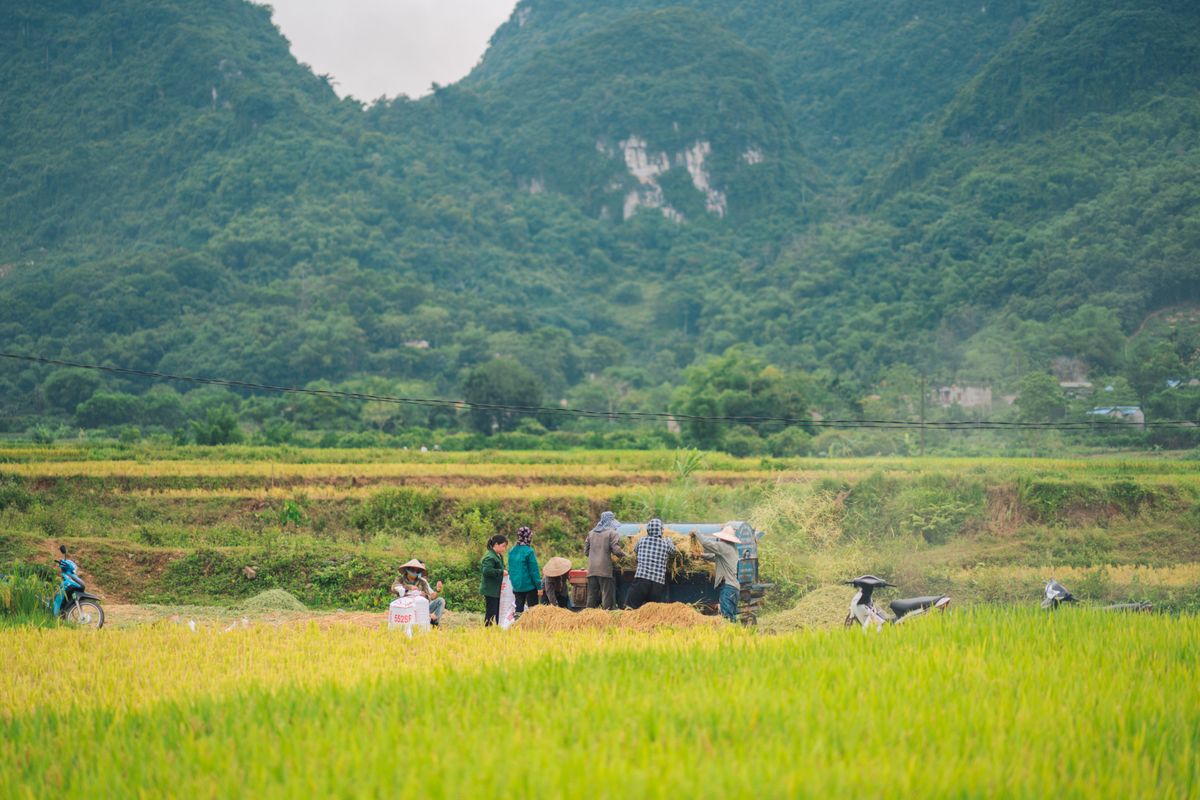
The story of Raja Kavuni is the story of the Muthu family — and the terra-cotta soil of Pudukkottai, Tamil Nadu, that has fed three generations of it.
For over seventy years, our family's life has revolved around the terra-cotta soil of Pudukkottai, Tamil Nadu. It is where our grandparents built a life from rice, where our parents grew up between paddy fields, and where we — the third generation — still rise before sunrise to walk the same rows, feet in the same wet earth they once stood in.
Raja Kavuni, the "forbidden rice" once reserved for royalty, has always been part of that story. What's changed is the world around it — a generation now looking for exactly the kind of food our family never stopped growing.
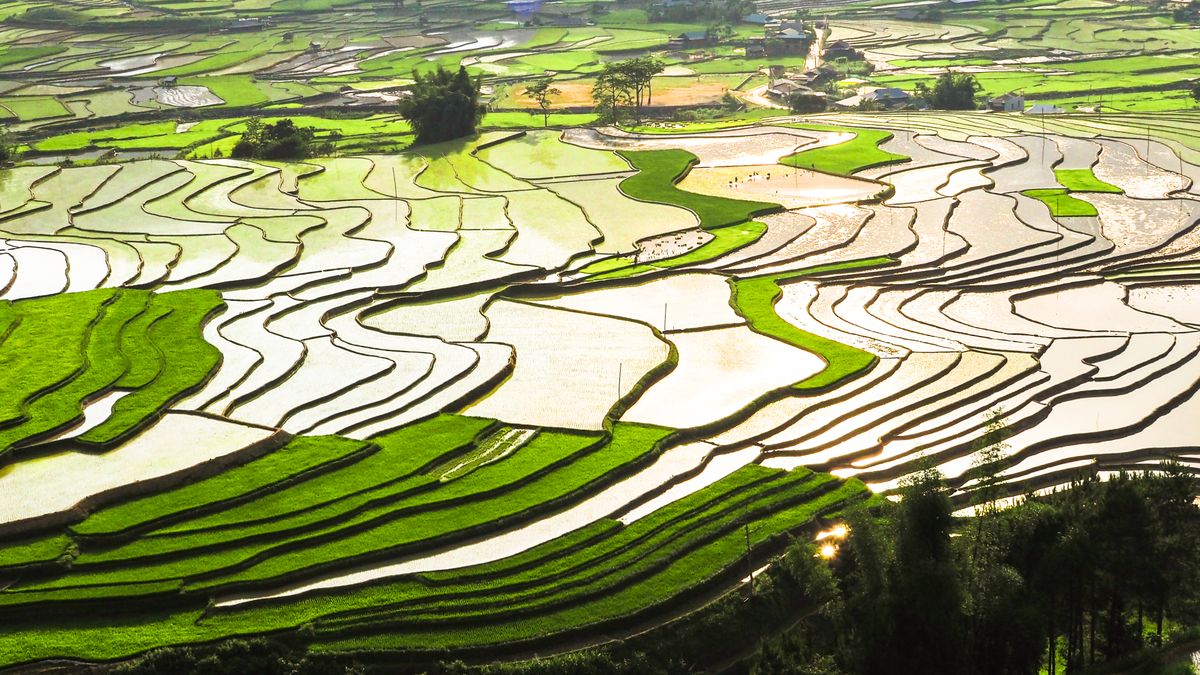
The dates blur a little across three generations — but the field, the seed, and the method never have.
Our grandparents broke this ground with nothing but hand tools, planting the first rows of Raja Kavuni on a stretch of terra-cotta soil in Pudukkottai that had never seen a single machine.
Our parents grew up between these paddy fields and carried the same methods forward — hand-sowing, hand-weeding, hand-harvesting — without ever mechanizing a single step or blending in grain from anywhere else.
Now it's our turn to walk the same rows at sunrise. The tools haven't changed. Neither has the reason we do it: rice that's exactly what it says it is, grown by the family whose name is on the box.
What began as food for one family's own kitchen is now sent farm-direct to households across India — so more people can taste what we've quietly known for seventy years.
Every stalk of Raja Kavuni on our estate is sown, tended and cut by hand — the same motions passed down through three pairs of hands before mine. It's slower — but it means nothing gets bruised, rushed, or blended in with a neighboring field. What arrives in your kitchen is exactly what grew on ours.
After the cut, grains are sun-dried the traditional way and milled just enough to remove the husk — leaving the bran, and the anthocyanins inside it, fully intact.
Each season starts with seed saved from the estate's own best stalks — never bought in bulk from an unknown source.
Seedlings are placed by hand, row by row, into the paddy — a slower start, but a gentler one for every young plant.
Weeding and water levels are checked and adjusted by hand throughout the growing season — no chemical shortcuts.
Stalks are cut one at a time with a sickle, exactly as our grandparents did — never with a combine harvester.
Grain is spread out under the open sun until the moisture is exactly right — no forced-air dryers, no shortcuts.
Milled just enough to remove the husk while keeping the bran intact, then packed by hand and shipped farm-direct.
No combine harvesters, no shortcuts — every stalk is cut by hand, the way it's been done for three generations.
Every grain comes from one family estate in Pudukkottai — never blended, never sourced from elsewhere.
By selling directly to families like yours, more of every order goes back into the land and the people who work it.
We keep this page about the work rather than individual names and faces — but the people behind it haven't changed in seventy years.
Broke the ground with nothing but hand tools, planting the first rows of Raja Kavuni on soil that had never seen a machine.
Grew up between the paddy fields and made sure nothing about the process was ever rushed, mechanized, or diluted with outside grain.
Walks the same rows at sunrise today — hand-sowing, hand-harvesting, and hand-packing every box that reaches your kitchen.
When you open a box of Raja Kavuni, you aren't just buying food — you are sitting down at the same table our family has for seventy years, and helping an unbroken Tamil farming heritage live on for one more generation.